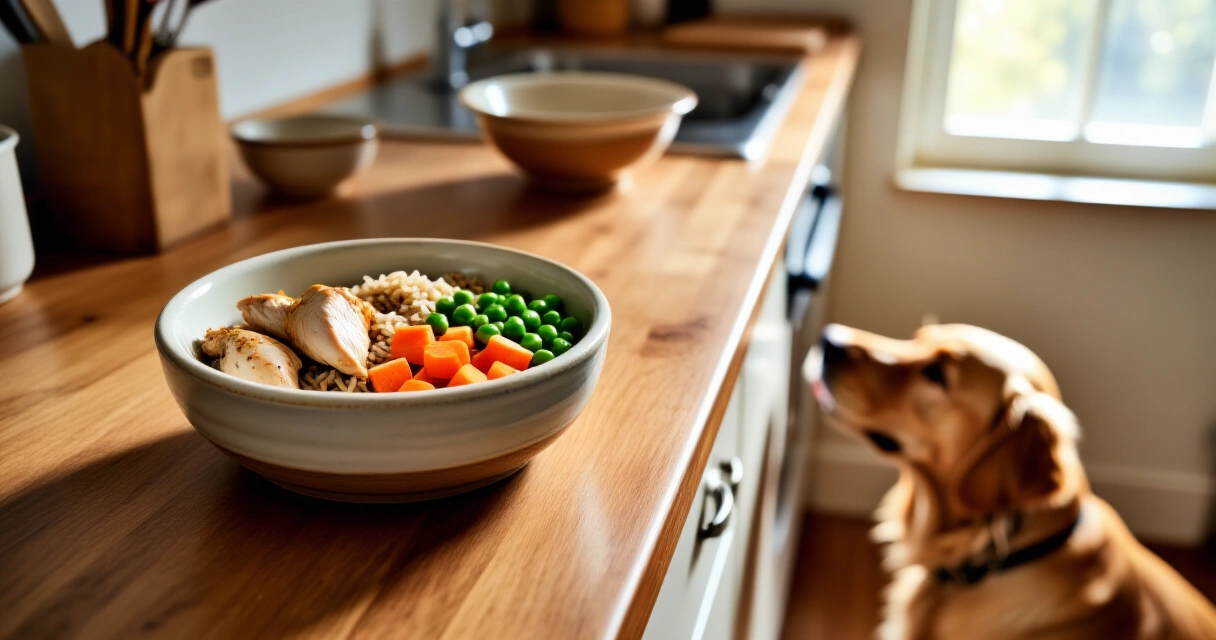
If you’ve been searching for healthy homemade dog food recipes vets recommend, you’ve likely discovered the hard truth: the internet is full of recipes that look wholesome but fall dangerously short on nutrition. According to a peer-reviewed evaluation published in veterinary nutrition literature, only 9 out of 200 home-prepared dog food recipes found online met all nutrient recommendations for adult maintenance — and the vast majority had multiple deficiencies. The good news is that with the right framework, real ingredients, and targeted supplementation, home cooking can be a safe, rewarding way to feed your dog.
Why Vets Have Strong Opinions About Homemade Dog Food
Veterinary nutrition has evolved significantly since the first commercial dog foods appeared in the late 19th century. For most of the 20th century, dogs were fed table scraps and home-cooked meals without formal nutritional guidelines. The establishment of the Association of American Feed Control Officials (AAFCO) nutrient profiles in the latter decades of the century gave the pet food industry — and home cooks — a formal benchmark for “complete and balanced” diets. Today, AAFCO profiles remain the foundational reference standard for both commercial and home-prepared canine diets.
The reason vets care so deeply about homemade dog food recipes is straightforward: nutrient deficiencies in dogs develop slowly, often showing no signs for months or years. By the time a dog presents with symptoms of calcium deficiency, iodine shortfall, or choline insufficiency, significant physiological damage may already have occurred. Veterinary research consistently identifies these three nutrients — calcium, iodine, and zinc — as the most commonly deficient in home-prepared recipes, according to peer-reviewed nutrient analyses of online recipes.
The Core Formula Behind Healthy Homemade Dog Food Recipes Vets Recommend
Across veterinary nutrition sources, a consistent structural framework emerges for homemade dog food recipes vets recommend. The Urbana Veterinary Clinic describes a balanced homemade recipe as one built from a cooked protein source, a digestible carbohydrate, cooked vegetables, and a source of healthy fat. Most vet-oriented guidance translates that into a practical ratio:
- ~50% protein-rich ingredients — lean meats such as skinless chicken, ground turkey, lean beef, or fish
- ~25% complex carbohydrates — brown rice, cooked sweet potato, or plain pasta
- ~25% vegetables — carrots, green beans, peas, cooked broccoli, or pumpkin
- Supplements — a recipe-specific vitamin-mineral supplement plus a measured calcium source
This ratio is a starting point, not a fixed rule. Dogs with allergies, gastrointestinal conditions, kidney disease, or specific breed predispositions need individualized formulation — and that is where a board-certified veterinary nutritionist becomes essential.
Vet-Recommended Ingredients: What to Include (and Avoid)
Safe and Nutrient-Dense Proteins
Turkey and chicken are among the most commonly featured proteins in healthy homemade dog food recipes vets recommend, because they are lean, easy to fully cook, and well-tolerated by most dogs. Salmon and other fatty fish provide omega-3 fatty acids (EPA and DHA) that support skin, coat, and joint health — though measured fish oil supplementation is still typically required alongside whole-fish ingredients to meet EPA/DHA targets reliably. Lean ground beef and eggs are also widely used, with hard-boiled eggs offering a complete amino-acid profile.
Vegetables and Carbohydrates Dogs Can Digest
Cooked carrots, green beans, peas, pumpkin, and broccoli are consistently featured in vet-referenced recipes. Cooking is important — raw brassicas like broccoli contain compounds that can interfere with thyroid function when fed in large amounts over time, while cooking reduces this risk considerably. Brown rice and sweet potato are the most common carbohydrate bases; both are highly digestible and provide fiber that supports healthy gastrointestinal motility.
What to Avoid
Several common human foods are toxic to dogs and must never appear in homemade recipes. These include onions and garlic (in all forms), grapes and raisins, chocolate, macadamia nuts, xylitol (found in many sugar-free foods), and raw yeast dough. Avocado, while not acutely fatal in small amounts, contains persin and is best avoided. Human food leftovers that may contain seasoning, salt, or any of these ingredients should not be repurposed as dog food.
Three Proven Recipes Aligned With Vet Nutrition Guidelines
The following recipes are structured according to the veterinary nutrition framework described above. They are not substitutes for formulation by a board-certified veterinary nutritionist, particularly for dogs with health conditions. For everyday healthy adult dogs, these provide a solid starting template — always with supplementation as specified.
| Recipe | Primary Protein | Carbohydrate Base | Key Vegetables | Supplement Required |
|---|---|---|---|---|
| Chicken & Brown Rice | Skinless chicken breast or thighs | Brown rice | Carrots, green beans, peas | Calcium carbonate + fish oil + vitamin-mineral mix |
| Turkey & Sweet Potato | Ground turkey | Cooked sweet potato | Pumpkin, zucchini | Calcium carbonate + fish oil + vitamin-mineral mix |
| Salmon & Rice | Cooked salmon (boneless) | Brown rice | Spinach, carrots | Calcium carbonate + vitamin-mineral mix |
Chicken & Brown Rice (Batch Recipe — approximately 4 days for a medium dog): Cook 2 lbs of boneless skinless chicken breast until fully done, then shred. Separately cook 2 cups of brown rice until soft. Steam 1 cup each of carrots, green beans, and peas until tender. Combine all ingredients, allow to cool fully, then mix in your recipe-specific supplement and a measured dose of calcium carbonate per your nutritionist’s or supplement product’s guidance. Refrigerate for up to 3–4 days; freeze additional portions.
Turkey & Sweet Potato (Digestive-Friendly Option): Brown 1.5 lbs of ground turkey in a large pan, breaking it up as it cooks. Add 1 cup cooked and mashed sweet potato, ½ cup cooked pumpkin (plain, not pie filling), and ½ cup diced zucchini. Stir together, remove from heat, and allow to cool before adding supplements. Pumpkin provides soluble fiber that supports gut motility — a reason this recipe is often cited in vet contexts for dogs with sensitive digestion.
Salmon & Rice (Omega-3 Focused): Bake or poach 1.5 lbs of boneless salmon until fully cooked. Flake into pieces, removing any remaining bones. Combine with 2 cups cooked brown rice and 1 cup steamed spinach and carrots. Cool completely before adding supplements. Even with a salmon base, a measured calcium supplement and a complete vitamin-mineral product are still required for nutritional balance.
The Non-Negotiable Role of Supplements in Homemade Dog Food
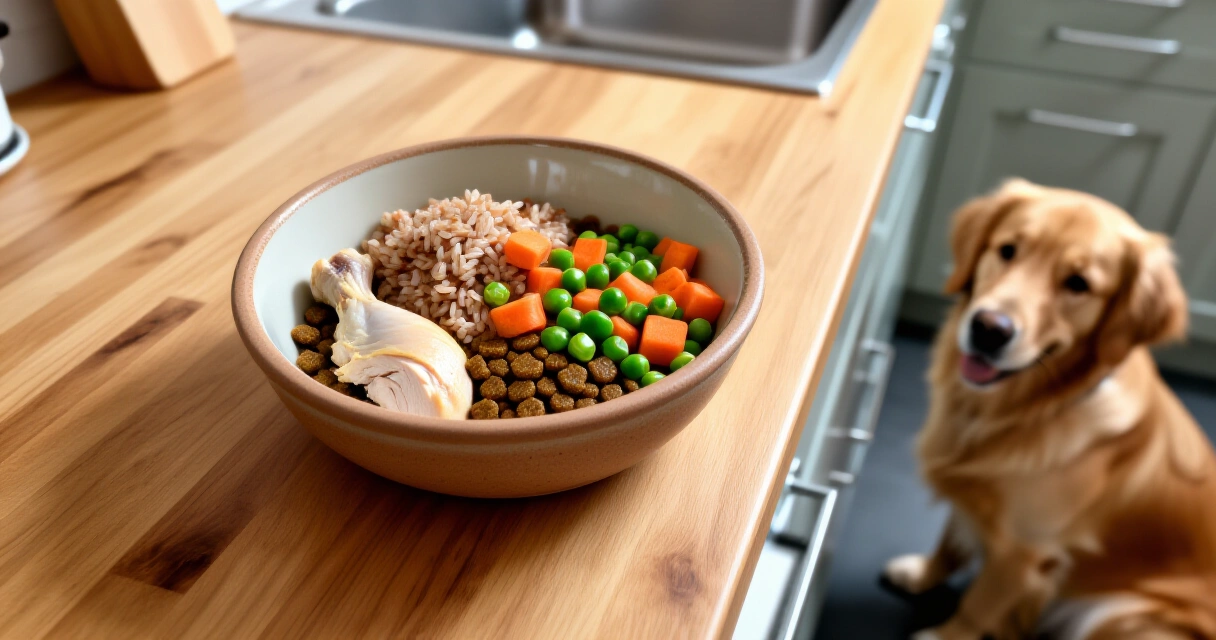
This is the single most important practical point in any guide to healthy homemade dog food recipes vets recommend: whole-food ingredients alone, no matter how carefully selected, do not reliably provide complete canine nutrition. Calcium is the most consistently deficient mineral in home-prepared diets, according to peer-reviewed veterinary nutrition research evaluating hundreds of published recipes. Iodine and zinc are close behind.
Veterinary nutrition guidance in 2026 emphasizes recipe-specific supplementation rather than generic multivitamin products. A general-purpose “dog multivitamin” added to a homemade recipe may still leave gaps — or, on the other end, stack nutrients already present in the recipe to potentially harmful levels. The most reliable approach currently recommended is to use a supplement formulated for the specific recipe being fed, or to have a veterinary nutritionist design both the recipe and the supplement plan together. Services such as BalanceIt allow owners to generate recipe-specific supplements under veterinary nutritionist oversight.
“A recipe being labeled ‘vet-approved’ online does not prove it is nutritionally complete — only a formal nutrient analysis can confirm that.”
Transitioning Your Dog to a Homemade Diet Safely
Switching abruptly from commercial food to a homemade diet is a common cause of digestive upset — loose stools, vomiting, and reduced appetite. Veterinary guidance consistently recommends a 7–10 day transition period, gradually replacing an increasing proportion of the current diet with the new homemade food. A typical schedule might look like this: days 1–3 at 25% homemade, days 4–6 at 50%, days 7–9 at 75%, then full transition on day 10. Dogs with sensitive digestive systems may need a slower transition. If your dog is starting homemade food for the first time, this guide on best dog breeds for first-time owners also covers basic nutrition considerations worth understanding before you begin.
Portioning, Storage, and Food Safety
Based on veterinary-published guidance, a practical general rule for portioning is approximately 1 cup of prepared homemade food per 10 lbs of body weight per day — though this varies based on the caloric density of the recipe, the dog’s activity level, age, and body condition. Always assess body condition score regularly, and adjust portions up or down accordingly. Puppies, pregnant dogs, senior dogs, and working dogs have substantially different energy and nutrient requirements than a healthy adult dog at rest.
For food safety, cooked homemade dog food should be refrigerated within two hours of preparation and consumed within 3–4 days. Batch-cooking is a practical approach: prepare a week’s worth of food, divide into daily portions, refrigerate what will be used within 4 days, and freeze the rest. Frozen homemade dog food remains safe for up to 3 months. Always thaw frozen portions in the refrigerator, not at room temperature, to prevent bacterial growth.
Vet-Recommended Nutrient Comparison: Homemade vs. Commercial Dog Food
| Nutritional Consideration | Well-Formulated Homemade Diet | AAFCO-Certified Commercial Food |
|---|---|---|
| Protein completeness | Achievable with varied proteins | Guaranteed by formulation |
| Calcium-phosphorus balance | Requires calcium supplement | Controlled in manufacturing |
| Iodine and zinc | Requires recipe-specific supplement | Added during processing |
| Omega-3 fatty acids (EPA/DHA) | Achieved with fish or fish oil | Variable by product |
| Ingredient transparency | Full control for owners | Dependent on label accuracy |
| Cost per meal | Generally higher | Generally lower |
| Suitability for dogs with allergies | High — novel proteins easily used | Depends on formula |
When to Consult a Board-Certified Veterinary Nutritionist
For dogs that are healthy, adult, and have no specific medical conditions, a well-structured homemade diet using the framework above — with proper supplementation — can be fed long-term with periodic veterinary monitoring. However, several situations call for formal consultation with a specialist rather than a general-practice vet or an online recipe:
- Your dog has a diagnosed medical condition (kidney disease, liver disease, diabetes, inflammatory bowel disease, pancreatitis)
- You are feeding a puppy, pregnant dog, or lactating dam, whose nutritional requirements differ substantially from adult maintenance
- Your dog has confirmed food allergies and requires novel protein formulation
- Your dog has been on a homemade diet for more than 3–6 months without a formal nutrient analysis
- Bloodwork or physical exams suggest a possible nutritional issue
The American College of Veterinary Nutrition maintains a directory of board-certified veterinary nutritionists (DACVNs) who can formulate individualized recipes or audit existing homemade diets. This level of oversight is particularly important for puppies: if you’ve recently brought one home and are considering homemade feeding from the start, reviewing the basics in our guide on how to house train a puppy fast is a useful early step — and a nutritionist consult should follow shortly after.
“Ongoing monitoring — including periodic physical exams and, in some cases, bloodwork — is a core part of long-term homemade feeding, not an optional extra.”
Frequently Asked Questions
Can I feed my dog homemade food every day?
Yes, but only if the diet is nutritionally complete and balanced — meaning it meets AAFCO nutrient profiles for the dog’s life stage. Peer-reviewed veterinary nutrition research confirms that most online recipes do not achieve this without supplementation. With proper supplementation and periodic veterinary monitoring, daily homemade feeding is safe for healthy adult dogs.
Is chicken and rice enough for my dog long-term?
No. Chicken and rice is a widely used short-term bland diet for digestive upset, but it is not nutritionally complete for long-term feeding. It lacks adequate calcium, several vitamins, and appropriate levels of omega-3 fatty acids. It should only be used temporarily (3–5 days) unless formally supplemented and balanced by a veterinary nutritionist.
Do I really need to add calcium to homemade dog food?
Yes, almost certainly. Calcium is the most consistently deficient mineral in home-prepared dog food recipes, according to veterinary nutrition research. Unless your recipe includes raw meaty bones (which carry their own food-safety considerations), you need to add a measured calcium source — typically calcium carbonate — at a dose specified by the recipe or a veterinary nutritionist.
Should I cook the food or feed it raw?
Cooked homemade diets are generally favored by veterinary nutrition experts over raw diets. Cooking eliminates microbial pathogens — Salmonella, Listeria, and E. coli — that pose risks to both dogs and the humans who handle the food. This concern is especially significant in households with children, elderly family members, or immunocompromised individuals. The American Veterinary Medical Association has consistently communicated caution around raw-meat pet diets for these reasons.
How much homemade food should I feed my dog each day?
A general starting guideline, based on published veterinary resources, is approximately 1 cup of prepared homemade food per 10 lbs of body weight per day. This varies with the recipe’s caloric density and the individual dog’s activity level, age, and body condition. Monitor your dog’s weight monthly and adjust accordingly, consulting your vet if significant weight change occurs.
Can puppies eat the same homemade recipes as adult dogs?
No. Puppies have substantially higher requirements for calcium, phosphorus, protein, and certain vitamins to support bone development and rapid growth. A recipe balanced for an adult dog is not appropriate for puppies. If you plan to home-cook for a puppy, consult a board-certified veterinary nutritionist directly — using an adult recipe for a puppy is one of the riskiest mistakes in homemade dog feeding.
Key Takeaways
- Healthy homemade dog food recipes vets recommend follow a 50% protein / 25% carbohydrate / 25% vegetable framework, always supplemented with calcium and a recipe-specific vitamin-mineral product.
- Only 9 of 200 online recipes met all adult-maintenance nutrient standards in peer-reviewed evaluation — supplementation is not optional.
- Chicken, turkey, salmon, brown rice, sweet potato, carrots, green beans, and pumpkin are the most consistently recommended ingredients in vet-referenced homemade recipes.
- Cooked diets are favored over raw diets for food safety, particularly in households with children or immunocompromised individuals.
- For dogs with medical conditions, puppies, pregnant dogs, or any dog fed homemade food long-term, consult a board-certified veterinary nutritionist (DACVN) through the American College of Veterinary Nutrition.
- Refrigerate prepared food for up to 3–4 days; freeze extra portions immediately.
Sources
- American Kennel Club: Choosing Balanced Ingredients for Homemade Dog Food — Retrieved June 15, 2026
- American College of Veterinary Nutrition (ACVN) — Retrieved June 15, 2026
- Association of American Feed Control Officials (AAFCO) — Nutrient Profiles — Retrieved June 15, 2026
- MSPCA-Angell: Sample Pet Food Recipes — Retrieved June 15, 2026
- Urbana Veterinary Clinic: Balanced Homemade Dog Food Recipes — Retrieved June 15, 2026


Recent Comments