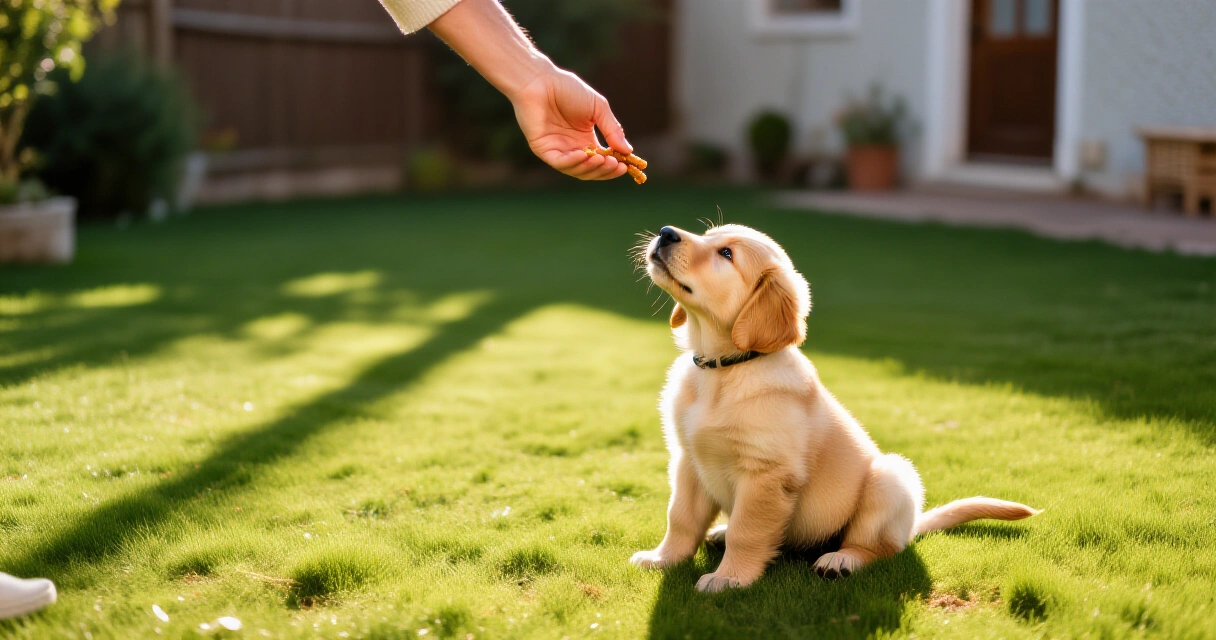
How to House Train a Puppy Fast: A Complete Step-by-Step Guide

Learning how to house train a puppy fast is one of the first priorities every new dog owner faces — and for good reason. According to the IVHS & SPCA, most puppies take 4–6 months to become fully house trained, with some taking up to a year. The good news is that consistent scheduling, proper supervision, and immediate rewards can dramatically compress that timeline. This guide walks you through the exact method used by veterinary schools and major animal welfare organizations to accelerate house training success.

In ShortThe fastest way to house train a puppy combines a strict potty schedule (every 30–60 minutes while awake), confinement management such as crate training, and immediate positive reinforcement after every successful outdoor elimination. According to the Ohio State University Indoor Pet Initiative, the two principles that drive speed are rewarding correct elimination every single time and preventing accidents before they happen.

Why House Training Speed Depends on Two Core Principles

Every fast house training method in veterinary and animal-welfare guidance boils down to the same two principles. The Ohio State University Indoor Pet Initiative states it directly: reward your dog every time she eliminates in the right place, and prevent her from making mistakes. When both principles work together, the puppy gets clear, consistent feedback about what behavior is expected — and the pattern forms faster.

Prevention is just as important as reward. Every indoor accident reinforces the wrong habit and adds time to the training process. That is why confinement, whether via a crate or a puppy-proofed small room, is not optional for owners who want faster results. Ohio State’s guidance is explicit: direct supervision or confinement is required whenever the puppy is not outdoors.

Typical house training timeline4–6 months (IVHS & SPCA)
Maximum timeline for some puppiesUp to 12 months (IVHS & SPCA)
Recommended age to begin training12–16 weeks (IVHS & SPCA)
Break frequency (puppies under 30 weeks)Every 30–60 min (UC Davis Vet Medicine)

The Right Age to Start and What to Realistically Expect

The IVHS & SPCA recommends beginning house training when your puppy is between 12 and 16 weeks old. At this age, puppies have enough bladder and bowel control to start learning. Starting earlier is rarely productive because very young puppies simply cannot hold their elimination long enough to form reliable habits.

Understanding the realistic timeline is important for staying motivated. Veterinary guidance consistently frames house training as a weeks-to-months process, not a matter of days. Mainstream claims that a puppy can be fully trained in 7 days are not supported by veterinary or animal welfare authorities. That said, owners who apply a strict schedule from day one will see measurable progress within the first two to three weeks — fewer accidents, clearer signals, and longer dry stretches.

Build a Potty Schedule That Accelerates Learning

A consistent potty schedule is the single most powerful tool for house training a puppy fast. The RSPCA recommends taking puppies outside at these trigger moments, regardless of the time on the clock:

  • Immediately after waking up (morning and after naps)
  • Before bed
  • Within 15 minutes of every meal
  • After play sessions or any physical exercise
  • After excitement — such as when guests arrive
  • Before being left alone and immediately upon returning home
  • Then every 45–60 minutes throughout the day, depending on age

The IVHS & SPCA adds that for very young puppies in the early training phase, outings should happen as frequently as every 30 minutes while the puppy is awake. The UC Davis School of Veterinary Medicine notes that puppies 30 weeks and older generally need breaks only 3–4 times per day, showing that the schedule can gradually relax as the puppy’s bladder matures.

Pro TipAlways take your puppy to the same outdoor spot every time. The familiar scent cues signal to the puppy that this is the elimination area, which can prompt faster results on each outing — a practical detail backed by the Best Friends Animal Society’s structured potty-training guidance.

How to House Train a Puppy Fast with Crate Training

Crate training is one of the most reliable tools for speeding up house training because dogs instinctively avoid soiling their sleeping area. The UC Davis School of Veterinary Medicine recommends keeping the puppy in a small confined area — such as a dog crate, bathroom, or puppy pen — whenever direct supervision is not possible. The space should be made comfortable with toys, food, and bedding.

Choosing the Right Crate Size

The crate must be sized correctly. If it is too large, the puppy may use one end as a toilet and sleep at the other. The crate should be just big enough for the puppy to stand, turn around, and lie down comfortably. Many wire-panel crates include a divider panel that lets you shrink the space as the puppy grows.

How Long Can a Puppy Stay in the Crate?

As a general guideline, puppies can hold their bladder for roughly one hour per month of age, up to a maximum of about four hours during the day for young puppies. An 8-week-old puppy should not be crated for more than one to two hours at a stretch. Overnight is a different situation — most puppies can manage longer stretches at night because their metabolism slows during sleep, though one or two nighttime outings are typical in the early weeks according to VCA Hospitals.

ImportantNever use the crate as punishment. If the puppy associates the crate with something negative, it becomes a source of stress rather than a calm, safe space — and training becomes harder, not faster.

Reward Correctly Every Single Time

Timing is everything when it comes to reinforcement. According to Best Friends Animal Society, the reward must happen immediately after the puppy finishes eliminating outdoors — not when you come back inside. A treat or enthusiastic praise delivered within a second or two of the behavior is far more effective than a delayed reward. Puppies cannot connect a reward given several minutes later to the specific act of going outside.

High-value treats — small pieces of real chicken, cheese, or commercial training treats — tend to produce faster learning than lower-value kibble. The reward should feel significant enough that the puppy is motivated to earn it again. Over time, as outdoor elimination becomes habitual, you can gradually reduce treat frequency while maintaining verbal praise.

The fastest house training happens when reward and prevention work together — every success celebrated, every accident stopped before it starts.

What to Do After an Accident (and What Not to Do)

Accidents will happen, especially in the first few weeks. How you respond matters. The RSPCA is explicit: never punish a dog for an accident after the fact, because the dog cannot connect the punishment to the earlier act. Punishing after the event — scolding, rubbing the puppy’s nose in it, or physical correction — causes fear and anxiety without teaching the correct behavior. It can actually slow down training.

If you catch the puppy mid-accident, interrupt calmly, take the puppy outside immediately, and reward if elimination continues outdoors. Then clean the soiled area thoroughly. The UC Davis School of Veterinary Medicine recommends using an enzymatic cleaner specifically designed for pet waste. Standard household cleaners do not fully break down the odor compounds that attract a puppy back to the same spot. Products such as Nature’s Miracle or Rocco & Roxie enzymatic sprays are widely used for this purpose.
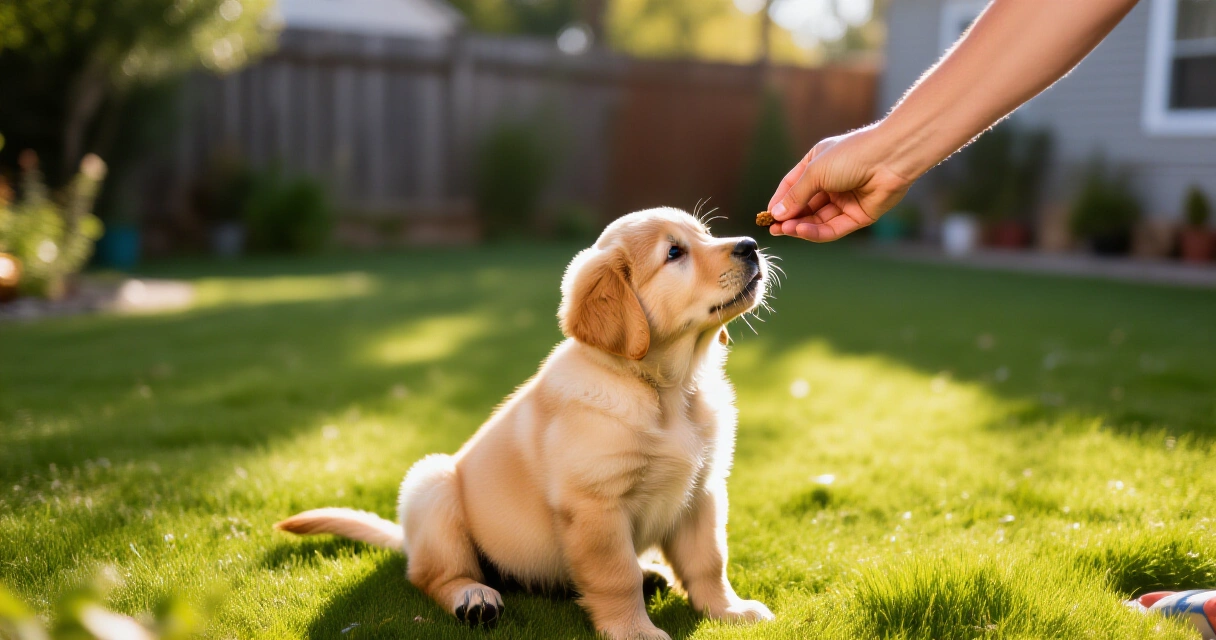
Puppy receiving a treat outdoors during house training session

Supervision Strategies When You Cannot Watch Constantly

Active supervision means keeping the puppy in the same room and within eyeline at all times when not crated. The Ohio State University Indoor Pet Initiative recommends tethering the puppy to your belt with a leash as one practical method — it forces proximity without requiring a separate space. When supervision must be interrupted, the puppy goes into the crate or a puppy-proofed pen.

For owners who want to learn about the right dog breeds before even beginning the house training process, understanding breed tendencies can be useful context. Some breeds are known for being easier or harder to house train based on their temperament. For a thorough overview of which dogs suit different lifestyles, see the guide to best dog breeds for first-time owners — it covers breed characteristics that directly affect training difficulty.

Potty Training Schedule by Puppy Age

The frequency of potty breaks should be adjusted as your puppy grows. Based on guidance from the UC Davis School of Veterinary Medicine and the RSPCA, here is a practical reference by age:

Puppy AgeOutdoor Breaks (Daytime)Approximate Hold Time
8–12 weeksEvery 30 minutes while awake~1 hour maximum
12–16 weeksEvery 45–60 minutes while awake~1.5–2 hours
16–24 weeksEvery 1.5–2 hours~2–3 hours
30+ weeks3–4 times daily (plus trigger events)~4 hours

Common House Training Mistakes That Slow Progress

Even well-intentioned owners make mistakes that extend the training timeline. A peer-reviewed study published in the Journal of the American Veterinary Medical Association found that preadoption counseling measurably improved house training outcomes among shelter dogs — meaning that informed owners achieve results faster. The most common errors include:

  • Giving the puppy unsupervised freedom too early in training
  • Inconsistent scheduling — skipping outings or varying timing unpredictably
  • Rewarding too slowly after the successful outdoor elimination
  • Punishing accidents after the fact rather than interrupting them in the moment
  • Using the wrong cleaner for indoor accidents, leaving residual odor that attracts repeat mistakes
  • Sending the puppy outside alone instead of accompanying them to the potty spot

VCA Hospitals recommends always accompanying the puppy outside to the elimination area rather than opening a door and waiting. Supervision during outdoor time ensures the reward is delivered at exactly the right moment and confirms that elimination actually occurred before returning inside.

Owner education before or immediately after adoption is one of the strongest predictors of house training success — informed routines beat raw patience every time.

Pee Pads vs. Outdoor-Only Training

Some owners use indoor pee pads — brands such as Frisco, Amazon Basics, or Glad for Pets are widely available options — as an intermediate step, particularly in high-rise apartments or with very young puppies who cannot yet access outdoors quickly. The tradeoff is that pee pads teach the puppy that indoor elimination is acceptable, which can complicate the transition to outdoor-only training. Most veterinary guidance, including that from Best Friends Animal Society, recommends going directly to outdoor training whenever possible to avoid teaching a habit that must later be unlearned.

If pee pads are necessary for your living situation, place them in one consistent location and gradually move them closer to the door over days and weeks, eventually transitioning the puppy to eliminating just outside the door and then fully outdoors.

What the Evidence SaysAccording to the IAABC Foundation Journal, the three legs of fast house training are a consistent schedule, immediate reward for correct elimination, and a structured naptime routine — particularly for puppies in busy households where accidents are more likely during unmonitored moments.

Comparison: Training Methods at a Glance

MethodBest ForSpeedKey Requirement
Crate + scheduleMost puppies, most homesFastestConsistent schedule, proper crate sizing
Puppy pen + scheduleOwners away for longer periodsModeratePen with pee pad section for overflow
Pee pad onlyApartments, very young puppiesSlowest overallPlan to transition to outdoor later
Free roam + supervisionOlder, partially trained dogsModerateEyes on puppy at all times

Frequently Asked Questions

How long does it realistically take to house train a puppy?

According to the IVHS & SPCA, most puppies take 4–6 months to become fully house trained, and some can take up to a year. With a strict schedule, crate training, and consistent rewards, noticeable progress typically appears within the first two to three weeks — but full reliability takes time as the puppy’s bladder matures.

Can you truly house train a puppy in 7 days?

Major veterinary and animal welfare authorities, including the IVHS & SPCA, VCA Hospitals, and the RSPCA, do not support claims that a puppy can be fully house trained in 7 days. A puppy may learn the concept quickly, but physical bladder control continues to develop for months. You can see significant improvement in one to two weeks with excellent consistency, but full training takes longer.

How often should I take my puppy outside to potty?

For puppies under 12 weeks, every 30 minutes while awake is the recommended starting point according to the IVHS & SPCA. As the puppy grows, the interval can extend. The RSPCA also advises taking puppies out after every meal, nap, play session, and period of excitement. Always go outside after trigger events regardless of the clock.

Should I punish my puppy for having an accident inside?

No. The RSPCA explicitly advises against punishing a puppy for an accident, whether during the act or after it. Puppies cannot connect after-the-fact punishment with the earlier behavior, so it produces fear without teaching the correct action. If you catch the puppy mid-accident, calmly interrupt and take them outside immediately, then reward if they finish outdoors.

Do some dog breeds take longer to house train?

A study published in Applied Animal Behaviour Science examined whether dog size is associated with differences in house training completeness, suggesting that physical and behavioral differences between dogs can affect outcomes. Breed temperament, owner consistency, and the age training begins are all factors that influence speed.

What is the best cleaner for puppy accidents inside?

The UC Davis School of Veterinary Medicine recommends enzymatic cleaners specifically formulated for pet waste. Standard household cleaners do not fully break down the odor compounds in urine and feces, meaning residual scent can draw the puppy back to the same spot. Look for products explicitly labeled as enzymatic pet cleaners — Nature’s Miracle and Rocco & Roxie are two well-known examples widely available in the US.

Key Takeaways

House training a puppy fast comes down to three things: a consistent potty schedule tied to trigger events, active supervision or confinement when you cannot watch, and immediate positive reinforcement every time the puppy eliminates outdoors. Avoiding punishment for accidents, cleaning with enzymatic cleaners, and starting training between 12 and 16 weeks all contribute to a faster, more successful process. Most puppies show meaningful progress within the first few weeks when these principles are applied consistently — and full reliability follows as bladder control matures over the following months.

Sources

Dog Rescue Group

Dog rescue groups are designed primarily to rescue all types of dogs that are being abused by their owners. Various dog rescue groups can legally break into a house and take any dog ​​outside that is being mistreated. Apart from rescuing dogs from abusive owner dog rescue groups it will also recover a variety of dogs that are in an overcrowded pound.

Other types of dogs that dog rescue groups maintain are the various stray dogs and abandoned dogs.

These dogs were all taken to a dog rescue center. At these centers the staff will calm frightened animals. Once the animal’s trust is earned, the staff will wash and clean the dirt and other material that has accumulated on the dog.

Once the dog has been thoroughly cleaned the vet of the rescue dog group will begin to heal the many cuts, scrapes and wounds the dog has. In addition, internal and external parasites are eliminated. The result of this is that the dog has a better chance of a full recovery.

After the treatment and medical check-up was completed, the dog was brought in and given lots of love. For many dogs this is the first time in their entire life that they are cared for and made comfortable and free. The dogs will also be given a nutritious diet so they can start looking healthy.

Before the dogs are ready for adoption a dog rescue group will place the dogs in foster care.

Various families that care for these unwanted dogs are used to groom and train these dogs to be loving family members.

The social and behavioral lessons that many adopted families want from their new four-legged family members will be well studied before dog rescue groups will consider that the dogs in their shelter are ready for adoption.

When a successful adoption has been achieved, the dog rescue group will provide counseling for the adopted family to become accustomed to the presence of their new pet and the changes that will occur in their life as a result of the pet. These are the many faces of the rescue dog group.

This dog rescue group provides us with a valuable alternative to unwanted euthanized dogs and puppies. Next time you hear about dog rescue groups in your area, you may want to see how you can help these groups look after many of their doggy tenants’ needs.

Why save the border collie?

It might be tempting to get a border collie knowing this kind of work attitude. The border collie breed is valued for their extraordinary intelligence and ability to breed – be it sheep or cattle, poultry or pigs and ostriches. But before you finally adopt a border collie from a rescue shelter, you need to first determine if a border collie is suitable for you and your lifestyle.

Border Collie Dog Breed

Many people are under the impression that these dogs are easy to handle and train because of their reputation as the best sheep shepherd in the world. Unknown to them, training a border collage is one of the most challenging tasks a border collie owner may face. To train them is like teaching a child genius who likes to think. And when the owner was tired and frustrated with what seemed to be causes of despair, these poor creatures were turned over to shelter. Training frontier collages require commitment and preparation. Not only that. Many border collages were also submitted because they had bitten someone, be it an adult or a child. Other people who haven’t displayed a strong instinct for painter also end up in the rescue.

So why save the border collie and endure the troubles he might cause?

There are many reasons why dog ​​adoption is recommended. First of all, not all rescue dogs, regardless of breed, are problem dogs. They may have been perceived as a problem by previous owners perhaps because this breed was not suitable for them, their lifestyle. Their previous owners may not understand what it takes to have a border collie for pets. In addition, most of the dogs in the shelter are already housed or socialized either by their previous owners or by shelter staff. Some have even finished their shot and been examined by a vet.

Through dog adoption, you are also helping your community by freeing up one space to accommodate other abandoned dogs. Most of these rescue shelters operate with little or no financial assistance from the government so that they can accommodate only a limited number of animals.

The idea of ​​adopting a dog isn’t bad at all. Just make sure that the border collie breed is right for you.

How You Can Help Fight Animal Cruelty

Animal cruelty is something close to the hearts of many. Many view it as abuse akin to child abuse, as animals are also powerless against human hands or neglect. It tends to arouse the same rage and rage as well, and there are now many institutions set up to help prevent animal cruelty, but there are also ways you can actively participate in making sure our animal friends aren’t abused.

Animal cruelty is something close to the hearts of many.

Many view it as abuse akin to child abuse, as animals are also powerless against human hands or neglect.

It tends to arouse the same rage and rage as well, and there are now many institutions set up to help prevent animal cruelty, as well as shelters where rescued animals find solace and comfort from their abusive or neglectful environment.

Years ago, not even a law was formed to protect animals from abuse, and the culprit could get away with doing whatever they wanted without consequences.

Now, there are animal protection laws established in nearly every state, and if you are found guilty of inhuman treatment of an animal, you are subject to anything from fines to community service to prison.

How To Fight Animal Cruelty?

While we’ve come a long way in legitimate animal protection laws, there is still room for improvement, as they’re not quite a rigid punishment in the eyes of most people, and still seem to be taken somewhat lightly.

Although I don’t get along with the extreme mentality of animal rights groups preaching vegetarianism and using tactics I don’t think is right to get their point, I certainly admire what they’re trying to do, which draws attention to the animal kingdom and gets the word out that friends Our furry friends need our help when they don’t have a voice of their own to defend themselves.

One can read about stories of inhuman treatment every week in any newspaper, and a few stories are enough to make one nauseous. There are stories of animals left at home without food or water, in their own waste and crawling with fleas and ticks, stories of farm animals being abandoned, neglected, under and abused, and horrific tales of household pets being beaten, starved, lost of care. , and even killed at the hands of those who were supposed to care for them, that all still needed to be dealt with.

There are steps you can take to ensure you are not a silent voice on your quest to prevent cruelty to animals, you just need to be aware of your surroundings and know what to watch out for.

You can report any suspicions to the local police, or if you have an agency that works with abused animals you can call them to investigate and fix too, usually APL (Animal Protective League) and other similar shelters and rights non-profit organizations. animals will be able to help too.

Some of the signs to look for you may already know, as most animal-loving people have an innate instinct to know when an animal has been abused or neglected. Many animals that have been abused physically will shy hands.

They will not want to approach you or anyone else, and may be especially leniency to their owners or react in an aggressive manner towards them or others.

While this does not necessarily indicate abuse, as some animals are just angry like that, it is a good underlying factor to look at when determining whether an animal has been physically abused.

If the animal has patches of hair that are missing or appear very thin, or even if they are infested with fleas, this may indicate neglect. Another one to look out for are the animals you see outside on very cold days, tied to chains for hours without warm shelter. This is dangerous and can be abused if the animal does not have shelter to retreat to.

Likewise if they are left chained outside for hours without food or water – water is of course the most vital of the two. Using your judgment, there are always animals that may be affiliated with certain situations, but if you consistently see this, and suspect it may be worth investigating by an animal protection agency officer or police department.

Of course the most obvious thing to judge is actually witnessing acts of animal abusen. If you see someone physically assaulting an animal, make sure you report this immediately, as this is the most overt and obvious form of animal abuse and it certainly warrants reporting for investigation.

Adopt Your Next Dog From Rescue or Pound

When I was a kid, dog adoption meant buying a puppy from a shop in the mall. I’ve never even heard of such a thing as an animal rescue shelter. This is something I truly regret every day now that I’m an adult and dogs are a central part of my life. I wouldn’t even consider adopting a dog from anywhere other than animal rescue organizations or the local pound right now.

My insight into ethical dog adoption is a sad story. Sparing the details, I met people involved in animal rescue when I was taking a wild road running along a highway near my house. The poor man almost died of starvation. When I took him to a local humane community location, I was told that he would almost certainly be put down in a few days. Incredulous, I asked why. Their response: ‘He’s black and big, and big black breed dogs are a dime a dozen, so they are rarely adopted.’

Needless to say, I took getting lost with me.

There’s no way I’ll ever give up on getting a dog adoption success story out of the mess. After doing a little research, I found that animal rescue shelters exist in every state.

That’s how I learned about a local group that not only works on dog adoption for stray dogs, but they also operate under a “no killing” philosophy. This type of animal rescue organization, which thrives primarily on donations from the public, provides puppies and dogs with a good place to live while they wait for their loving families to take them home. And if they are never adopted, then they live their natural lives in comfort and with human friendship, even from volunteering in shelters.

I learned that the adoption of an orphaned dog from this animal rescue facility saves thousands of lives every year, nationwide. And most groups are overwhelmed by the number of stray dogs and people who want to get rid of them for whatever reason (usually for their own convenience). The main fault lies in the so-called puppy factory, which cranks up litter after litter for sale at your local pet store. And of course, the blame also lies with people not getting their dogs sterilized or sterilized. Bob Barker was right all this time! If even 50% of owners fix their animals, the situation will improve dramatically.

So embarked on my own journey to the good side of dog adoption.

I ended up marrying a woman who owned an animal rescue organization that adopted a “no killing” philosophy. We share our lives with many dogs, all mixed breeds, and all of whom we love completely.

Oh, and the stray I mentioned earlier that started my adopted dog wander? Her name is Cookie, and when I first found her she was skin and bones. That was before a loving family living near the large park adopted him from the animal rescue group. The last time I saw him, he was almost fat from all the food and had the time of his life playing in the park. I cry. Happy tears.

Next time dog adoption is on your agenda, please consider checking out an animal rescue shelter near you. Or go to the local pound. Save lives!

Adopt a puppy – and save lives!

See how you can help improve the life of a homeless dog by adopting one from an animal shelter or pound. The facts and figures relating to abandoned and surrendered dogs in the US today are shocking … and heartbreaking! But there is a way for you to make a difference – adopt a puppy or rescue dog when you decide to add a four-legged companion to your family. This could be one of the most rewarding things you will ever do.

If you’re thinking about adding a new puppy to your family, why not consider adopting him from your local animal shelter or city Pound?

Most of the pounds and rescues are overflowing with dogs who crave for a loving home.

You may think that only older or ‘problem’ dogs end up in the shelter, but you’d be wrong!

Many older puppies and juvenile dogs (between 9 and 12 months of age) give up on shelters every day. And often the trash ‘oops’ (unexpected or unwanted puppy) or mama dog or abandoned trash, ends up there too. Even purebred dogs and puppies can be found in animal and pound shelters across the country (estimates of purebreds in shelters range from 25 – 40% of all homeless dogs).

The facts and figures surrounding homeless dogs in the United States are horrendous, and heartbreaking. According to the National Council on the Study and Policy of Pet Populations, about 2 MILLION dogs enter US shelters each year. And it’s getting worse – the statistics gathered by other groups are even higher, sometimes up to 8 MILLION + dogs give up every year! When you take into account that it is estimated that only 1 in 10 homeless dogs will ever be adopted, that’s a truly shocking and tragic picture.

These puppies and dogs are homeless without fault of their own, and most of them will make as healthy, loving, and wonderful pets as any pup you can get from a breeder.

Breed breed puppies from breeders can easily cost $ 1000- $ 1500 (and often more), while pure, rescued puppies often do not cost more than $ 300- $ 500.Mix breed homeless puppies will cost significantly less, depending on the pound cost or individual shelter.

There are also other financial savings.

When you adopt a pup from the pound or rescue center, it will likely be sterilized or sanitized and updated on all shots. You may even get additional ‘perks’, such as a discount on training classes or something similar.

Of course, saving money shouldn’t be a major consideration. Far more important is the fact that you can literally, literally, save lives! Not every pound or rescue shelter can have a ‘no kill policy’ in place, and millions of dogs are euthanized every year. This is despite the fact that they are very healthy, temperamentally healthy and want nothing more than home and family to call it their own.

Older / older puppies or dogs are more often at risk of being ‘simplified’ as they pass through the ‘cute puppy’ stage. However, these homeless dogs can make wonderful pets and are easier to care for, and settle down more quickly, when they are given the opportunity for a new home.

Puppies are adorable, but they are HARD WORK and very time and labor intensive. Even puppies that are slightly older (4 months plus) are easier to housebreak and train than 8 week old ‘baby’ puppies. Adult dogs (anything over 12 – 18 months) are generally well mannered, often have broken houses and are at least partially obedient trained, and come out of the ‘chew everything’ stage. All pluses for sure!

If you think you can adopt a puppy or dog, and give it a chance for a better life, go to your local City Pound or save some shelter and talk to the staff about homeless dogs there. They are usually very helpful and knowledgeable, and are more than happy to help you choose the right canine companion.

Obviously, every puppy or dog needs a little time adjusting to the new home and family. But lots of love, attention, patience, toys and a good diet are all they need.

So, moving on, give it some thoughts! Adopting a homeless puppy is probably one of the most rewarding things you will ever do. The puppy or dog that you bring home will be the one that is green

What Training Is Involved in Rescue Dog Training

There are many reasons why dogs are considered a man’s best friend, and one of these reasons is their usefulness in emergency situations. As is the case with agility and obedience training, rescue dog training requires several principles to be observed.

Exercising Their Compliance

One trait of rescue dogs is constant obedience because they can’t do their job if they don’t do what they’re told. They should be used to obey commands such as sitting, heel, staying, coming and jogging exercises. All of these must be fulfilled, so that their handlers can be sure that their orders will be respected when needed.

Train Their Agility

It is not only a sports dog that needs to be agile, but also a dog that is trained to save other people. At the most basic level, rescue dogs will be assisted by agility training at the physical level, letting them perform even the most difficult tasks. This can come in handy when they save people. If they are trained by someone who knows their job, the dog through agility training will be able to surpass many of the obstacles he may encounter.

Take

Picking up is a big part of any rescue operation. A dog must be able to retrieve things or even a person from a place where others cannot enter. If you want a dog to be able to pick up a person, it has to go through a picking exercise. He will learn how to take anything, from skin, to wood or even an injured person, all using the “fetch” command.

Training on proper sorting

One part of rescue training teaches a dog how to adapt to different exercises, and that part is position. Positioning training is achieved by both compulsive and inductive training.

Position training should be something that is taught from when he is a puppy. He needs to learn for the type of position: front and heel positions. The heel position teaches the dog to stand near the trainer, level with his left leg. The front position teaches him to sit in front of the trainer, parallel to the trainer’s front legs.

You can teach your dog to adopt the correct position in two ways. Inductive and compulsive methods.

The compulsive method, when used to train the dog how to adopt the front position, will teach him how to sit in front of the handler. If you use it in conjunction with an order such as “sitting”, the same principle is used – the owner needs to help the pet stand, then sit in front of him. The position needs to be parallel to the owner’s left foot if he asks for the heel position.

If we talk about the inductive method, it will require the use of food or treats to teach the dog how to respond to an owner’s command to take one of two positions. One example of an inductive method is offering a pet a treat before you give it an order. If he accepts a treat, give him commands such as sit down, come or come down right before giving him the gift. Remember, offer, but give only after the order.

If you use compulsive methods, you may be using some physical guidance, but you shouldn’t use them in a way that might injure the dog. Don’t make it hard, use it gently and firmly. If you are rude, it can jeopardize training.

If you are training a rescue dog, you should know that that is not one thing they need to learn. It is a mixture of the various commands and abilities they need to learn.

Animal Adoption

The idea of ​​having a pet is one that many people consider but they rarely take into account the various needs of their new pet when they start the process of adopting this pet. These people will just look about adopting any pet they see in pet stores and in pet shelters that look cute. It is only when the animal adoption process is over and they have brought a new family member home, that they are faced with the fact that they have adopted an animal.

Humanity for Animals

For these reasons and many others when you decide to adopt any type of pet you should see if you have the ability to take that pet. There are many different animals that can be considered pets. These pets generally include dogs, guinea pigs, cats, parrots, rabbits, hamsters, and various types of freshwater and saltwater fish.

While these are the main types of adopted pets that people consider to be friends or just regular pets, there are other exotic pets that some think would suit a pet. Pets of this breed include snakes, turtles, other reptiles and eagles, and even lion cubs.

Regardless of the type of animal you may be considering having there are certain factors that need to be considered before you go through the animal adoption procedure. These factors will include the animal’s emotional state, mental state and physical condition after you bring the animal to your home.

While you may think that owning a pet is easy there are many requirements that your new pet needs to look into. Since these different animals have different temperaments and requirements for their happiness and health, you will need to talk to your vet or shelter staff to understand the various needs of your new pet.

In animal adoption you bring home the likes and dislikes of the already established pets.

These likes and dislikes will extend even to their dietary requirements. When you are figuring out the right types of food for your new pet, you need to understand what foods will provide them with a good nutritious diet.

Many of these facts are worth thinking about when you are looking for animal adoption. Even though there are many pets that need a home and a lot of love you should be a match for their needs and future happiness. So until you are confident about giving 100% of your time and attention to these animals you may want to wait a while before you adopt a pet.