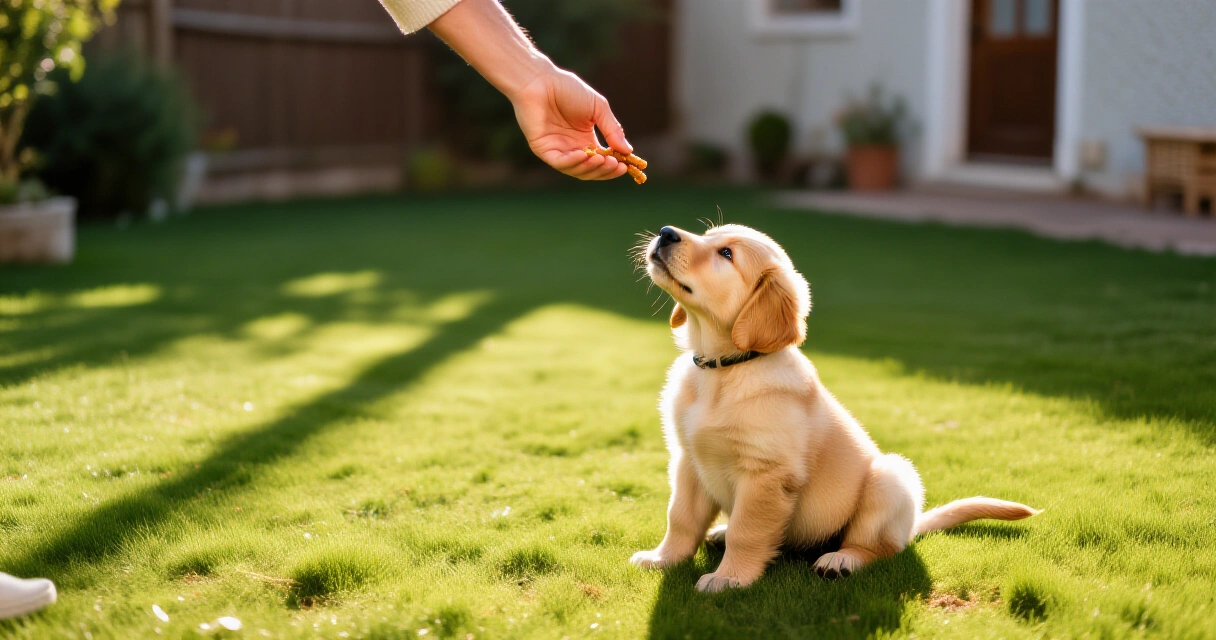
Learning how to house train a puppy fast is one of the first priorities every new dog owner faces — and for good reason. According to the IVHS & SPCA, most puppies take 4–6 months to become fully house trained, with some taking up to a year. The good news is that consistent scheduling, proper supervision, and immediate rewards can dramatically compress that timeline. This guide walks you through the exact method used by veterinary schools and major animal welfare organizations to accelerate house training success.
Why House Training Speed Depends on Two Core Principles
Every fast house training method in veterinary and animal-welfare guidance boils down to the same two principles. The Ohio State University Indoor Pet Initiative states it directly: reward your dog every time she eliminates in the right place, and prevent her from making mistakes. When both principles work together, the puppy gets clear, consistent feedback about what behavior is expected — and the pattern forms faster.
Prevention is just as important as reward. Every indoor accident reinforces the wrong habit and adds time to the training process. That is why confinement, whether via a crate or a puppy-proofed small room, is not optional for owners who want faster results. Ohio State’s guidance is explicit: direct supervision or confinement is required whenever the puppy is not outdoors.
The Right Age to Start and What to Realistically Expect
The IVHS & SPCA recommends beginning house training when your puppy is between 12 and 16 weeks old. At this age, puppies have enough bladder and bowel control to start learning. Starting earlier is rarely productive because very young puppies simply cannot hold their elimination long enough to form reliable habits.
Understanding the realistic timeline is important for staying motivated. Veterinary guidance consistently frames house training as a weeks-to-months process, not a matter of days. Mainstream claims that a puppy can be fully trained in 7 days are not supported by veterinary or animal welfare authorities. That said, owners who apply a strict schedule from day one will see measurable progress within the first two to three weeks — fewer accidents, clearer signals, and longer dry stretches.
Build a Potty Schedule That Accelerates Learning
A consistent potty schedule is the single most powerful tool for house training a puppy fast. The RSPCA recommends taking puppies outside at these trigger moments, regardless of the time on the clock:
- Immediately after waking up (morning and after naps)
- Before bed
- Within 15 minutes of every meal
- After play sessions or any physical exercise
- After excitement — such as when guests arrive
- Before being left alone and immediately upon returning home
- Then every 45–60 minutes throughout the day, depending on age
The IVHS & SPCA adds that for very young puppies in the early training phase, outings should happen as frequently as every 30 minutes while the puppy is awake. The UC Davis School of Veterinary Medicine notes that puppies 30 weeks and older generally need breaks only 3–4 times per day, showing that the schedule can gradually relax as the puppy’s bladder matures.
How to House Train a Puppy Fast with Crate Training
Crate training is one of the most reliable tools for speeding up house training because dogs instinctively avoid soiling their sleeping area. The UC Davis School of Veterinary Medicine recommends keeping the puppy in a small confined area — such as a dog crate, bathroom, or puppy pen — whenever direct supervision is not possible. The space should be made comfortable with toys, food, and bedding.
Choosing the Right Crate Size
The crate must be sized correctly. If it is too large, the puppy may use one end as a toilet and sleep at the other. The crate should be just big enough for the puppy to stand, turn around, and lie down comfortably. Many wire-panel crates include a divider panel that lets you shrink the space as the puppy grows.
How Long Can a Puppy Stay in the Crate?
As a general guideline, puppies can hold their bladder for roughly one hour per month of age, up to a maximum of about four hours during the day for young puppies. An 8-week-old puppy should not be crated for more than one to two hours at a stretch. Overnight is a different situation — most puppies can manage longer stretches at night because their metabolism slows during sleep, though one or two nighttime outings are typical in the early weeks according to VCA Hospitals.
Reward Correctly Every Single Time
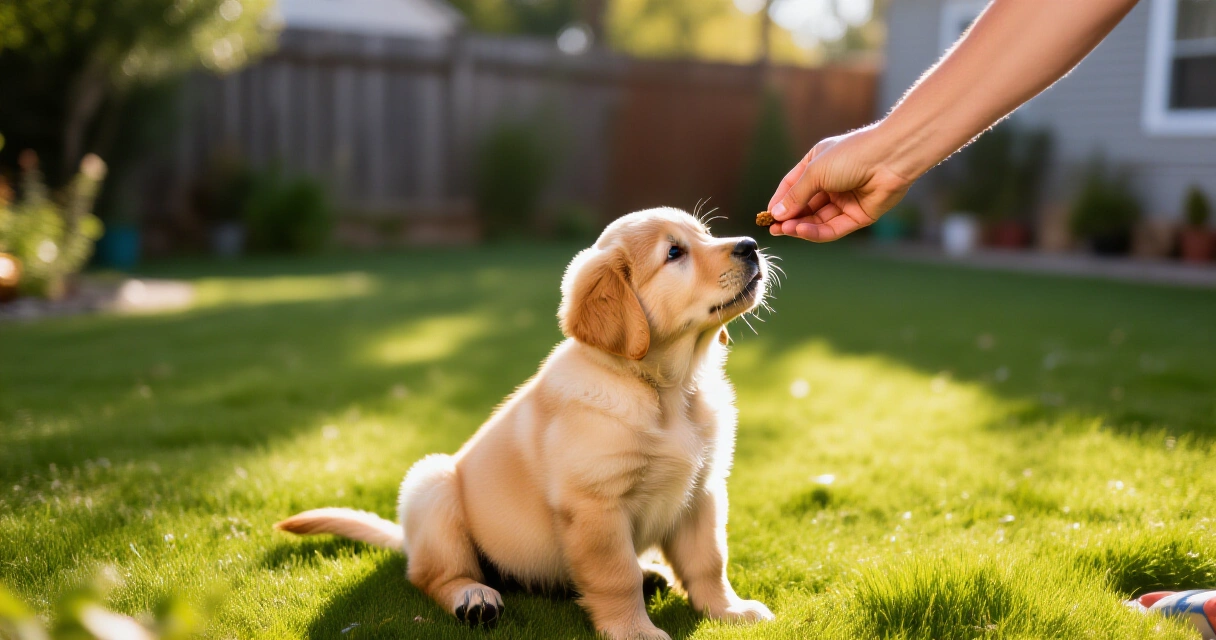
Timing is everything when it comes to reinforcement. According to Best Friends Animal Society, the reward must happen immediately after the puppy finishes eliminating outdoors — not when you come back inside. A treat or enthusiastic praise delivered within a second or two of the behavior is far more effective than a delayed reward. Puppies cannot connect a reward given several minutes later to the specific act of going outside.
High-value treats — small pieces of real chicken, cheese, or commercial training treats — tend to produce faster learning than lower-value kibble. The reward should feel significant enough that the puppy is motivated to earn it again. Over time, as outdoor elimination becomes habitual, you can gradually reduce treat frequency while maintaining verbal praise.
The fastest house training happens when reward and prevention work together — every success celebrated, every accident stopped before it starts.
What to Do After an Accident (and What Not to Do)
Accidents will happen, especially in the first few weeks. How you respond matters. The RSPCA is explicit: never punish a dog for an accident after the fact, because the dog cannot connect the punishment to the earlier act. Punishing after the event — scolding, rubbing the puppy’s nose in it, or physical correction — causes fear and anxiety without teaching the correct behavior. It can actually slow down training.
If you catch the puppy mid-accident, interrupt calmly, take the puppy outside immediately, and reward if elimination continues outdoors. Then clean the soiled area thoroughly. The UC Davis School of Veterinary Medicine recommends using an enzymatic cleaner specifically designed for pet waste. Standard household cleaners do not fully break down the odor compounds that attract a puppy back to the same spot. Products such as Nature’s Miracle or Rocco & Roxie enzymatic sprays are widely used for this purpose.
Supervision Strategies When You Cannot Watch Constantly
Active supervision means keeping the puppy in the same room and within eyeline at all times when not crated. The Ohio State University Indoor Pet Initiative recommends tethering the puppy to your belt with a leash as one practical method — it forces proximity without requiring a separate space. When supervision must be interrupted, the puppy goes into the crate or a puppy-proofed pen.
For owners who want to learn about the right dog breeds before even beginning the house training process, understanding breed tendencies can be useful context. Some breeds are known for being easier or harder to house train based on their temperament. For a thorough overview of which dogs suit different lifestyles, see the guide to best dog breeds for first-time owners — it covers breed characteristics that directly affect training difficulty.
Potty Training Schedule by Puppy Age
The frequency of potty breaks should be adjusted as your puppy grows. Based on guidance from the UC Davis School of Veterinary Medicine and the RSPCA, here is a practical reference by age:
| Puppy Age | Outdoor Breaks (Daytime) | Approximate Hold Time |
|---|---|---|
| 8–12 weeks | Every 30 minutes while awake | ~1 hour maximum |
| 12–16 weeks | Every 45–60 minutes while awake | ~1.5–2 hours |
| 16–24 weeks | Every 1.5–2 hours | ~2–3 hours |
| 30+ weeks | 3–4 times daily (plus trigger events) | ~4 hours |
Common House Training Mistakes That Slow Progress
Even well-intentioned owners make mistakes that extend the training timeline. A peer-reviewed study published in the Journal of the American Veterinary Medical Association found that preadoption counseling measurably improved house training outcomes among shelter dogs — meaning that informed owners achieve results faster. The most common errors include:
- Giving the puppy unsupervised freedom too early in training
- Inconsistent scheduling — skipping outings or varying timing unpredictably
- Rewarding too slowly after the successful outdoor elimination
- Punishing accidents after the fact rather than interrupting them in the moment
- Using the wrong cleaner for indoor accidents, leaving residual odor that attracts repeat mistakes
- Sending the puppy outside alone instead of accompanying them to the potty spot
VCA Hospitals recommends always accompanying the puppy outside to the elimination area rather than opening a door and waiting. Supervision during outdoor time ensures the reward is delivered at exactly the right moment and confirms that elimination actually occurred before returning inside.
Owner education before or immediately after adoption is one of the strongest predictors of house training success — informed routines beat raw patience every time.
Pee Pads vs. Outdoor-Only Training
Some owners use indoor pee pads — brands such as Frisco, Amazon Basics, or Glad for Pets are widely available options — as an intermediate step, particularly in high-rise apartments or with very young puppies who cannot yet access outdoors quickly. The tradeoff is that pee pads teach the puppy that indoor elimination is acceptable, which can complicate the transition to outdoor-only training. Most veterinary guidance, including that from Best Friends Animal Society, recommends going directly to outdoor training whenever possible to avoid teaching a habit that must later be unlearned.
If pee pads are necessary for your living situation, place them in one consistent location and gradually move them closer to the door over days and weeks, eventually transitioning the puppy to eliminating just outside the door and then fully outdoors.
Comparison: Training Methods at a Glance
| Method | Best For | Speed | Key Requirement |
|---|---|---|---|
| Crate + schedule | Most puppies, most homes | Fastest | Consistent schedule, proper crate sizing |
| Puppy pen + schedule | Owners away for longer periods | Moderate | Pen with pee pad section for overflow |
| Pee pad only | Apartments, very young puppies | Slowest overall | Plan to transition to outdoor later |
| Free roam + supervision | Older, partially trained dogs | Moderate | Eyes on puppy at all times |
Frequently Asked Questions
How long does it realistically take to house train a puppy?
According to the IVHS & SPCA, most puppies take 4–6 months to become fully house trained, and some can take up to a year. With a strict schedule, crate training, and consistent rewards, noticeable progress typically appears within the first two to three weeks — but full reliability takes time as the puppy’s bladder matures.
Can you truly house train a puppy in 7 days?
Major veterinary and animal welfare authorities, including the IVHS & SPCA, VCA Hospitals, and the RSPCA, do not support claims that a puppy can be fully house trained in 7 days. A puppy may learn the concept quickly, but physical bladder control continues to develop for months. You can see significant improvement in one to two weeks with excellent consistency, but full training takes longer.
How often should I take my puppy outside to potty?
For puppies under 12 weeks, every 30 minutes while awake is the recommended starting point according to the IVHS & SPCA. As the puppy grows, the interval can extend. The RSPCA also advises taking puppies out after every meal, nap, play session, and period of excitement. Always go outside after trigger events regardless of the clock.
Should I punish my puppy for having an accident inside?
No. The RSPCA explicitly advises against punishing a puppy for an accident, whether during the act or after it. Puppies cannot connect after-the-fact punishment with the earlier behavior, so it produces fear without teaching the correct action. If you catch the puppy mid-accident, calmly interrupt and take them outside immediately, then reward if they finish outdoors.
Do some dog breeds take longer to house train?
A study published in Applied Animal Behaviour Science examined whether dog size is associated with differences in house training completeness, suggesting that physical and behavioral differences between dogs can affect outcomes. Breed temperament, owner consistency, and the age training begins are all factors that influence speed.
What is the best cleaner for puppy accidents inside?
The UC Davis School of Veterinary Medicine recommends enzymatic cleaners specifically formulated for pet waste. Standard household cleaners do not fully break down the odor compounds in urine and feces, meaning residual scent can draw the puppy back to the same spot. Look for products explicitly labeled as enzymatic pet cleaners — Nature’s Miracle and Rocco & Roxie are two well-known examples widely available in the US.
Key Takeaways
House training a puppy fast comes down to three things: a consistent potty schedule tied to trigger events, active supervision or confinement when you cannot watch, and immediate positive reinforcement every time the puppy eliminates outdoors. Avoiding punishment for accidents, cleaning with enzymatic cleaners, and starting training between 12 and 16 weeks all contribute to a faster, more successful process. Most puppies show meaningful progress within the first few weeks when these principles are applied consistently — and full reliability follows as bladder control matures over the following months.
Sources
- IVHS & SPCA — Potty Training — Retrieved May 27, 2026
- UC Davis School of Veterinary Medicine — Housetraining Your Puppy — Retrieved May 27, 2026
- Ohio State University Indoor Pet Initiative — Housetraining — Retrieved May 27, 2026
- VCA Hospitals — House Training for Puppies and Dogs — Retrieved May 27, 2026
- RSPCA — How To Toilet Train Your Puppy or Dog — Retrieved May 27, 2026
- Best Friends Animal Society — How to Potty Train a Puppy or Dog — Retrieved May 27, 2026
- Journal of the American Veterinary Medical Association — Effects of preadoption counseling on house-training success — Retrieved May 27, 2026
- Applied Animal Behaviour Science — Differences in completeness of house-training between dogs based on size — Retrieved May 27, 2026
- IAABC Foundation Journal — Housetraining Hang-Ups — Retrieved May 27, 2026
Recent Comments