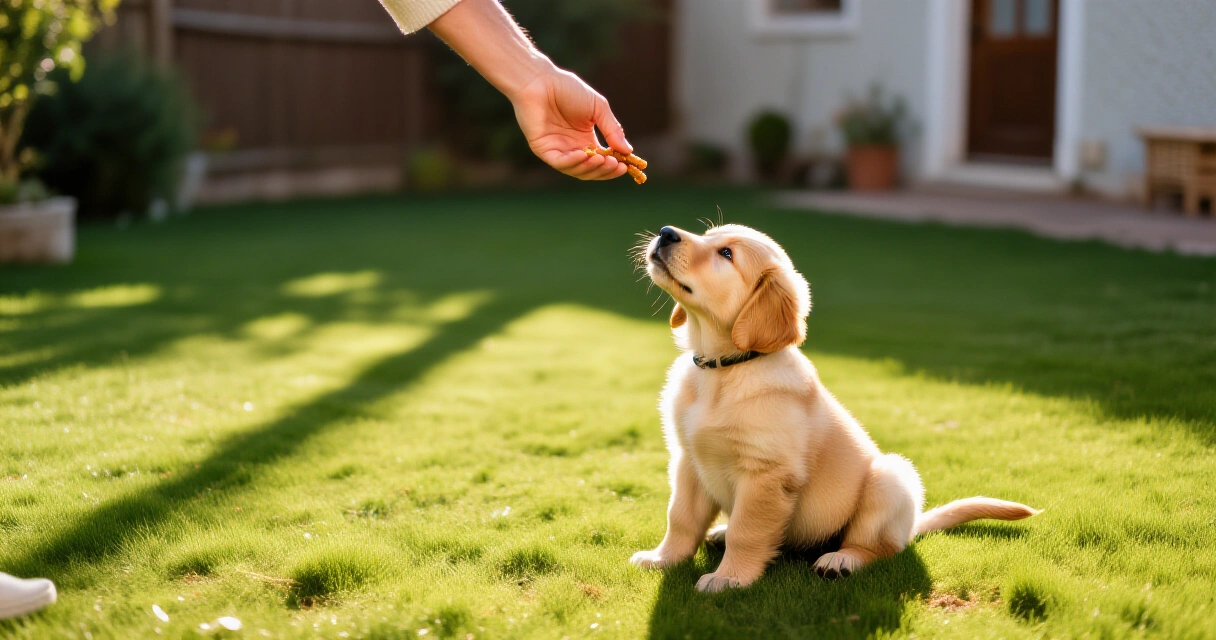
How to House Train a Puppy Fast: A Complete Step-by-Step Guide

Learning how to house train a puppy fast is one of the first priorities every new dog owner faces — and for good reason. According to the IVHS & SPCA, most puppies take 4–6 months to become fully house trained, with some taking up to a year. The good news is that consistent scheduling, proper supervision, and immediate rewards can dramatically compress that timeline. This guide walks you through the exact method used by veterinary schools and major animal welfare organizations to accelerate house training success.

In ShortThe fastest way to house train a puppy combines a strict potty schedule (every 30–60 minutes while awake), confinement management such as crate training, and immediate positive reinforcement after every successful outdoor elimination. According to the Ohio State University Indoor Pet Initiative, the two principles that drive speed are rewarding correct elimination every single time and preventing accidents before they happen.

Why House Training Speed Depends on Two Core Principles

Every fast house training method in veterinary and animal-welfare guidance boils down to the same two principles. The Ohio State University Indoor Pet Initiative states it directly: reward your dog every time she eliminates in the right place, and prevent her from making mistakes. When both principles work together, the puppy gets clear, consistent feedback about what behavior is expected — and the pattern forms faster.

Prevention is just as important as reward. Every indoor accident reinforces the wrong habit and adds time to the training process. That is why confinement, whether via a crate or a puppy-proofed small room, is not optional for owners who want faster results. Ohio State’s guidance is explicit: direct supervision or confinement is required whenever the puppy is not outdoors.

Typical house training timeline4–6 months (IVHS & SPCA)
Maximum timeline for some puppiesUp to 12 months (IVHS & SPCA)
Recommended age to begin training12–16 weeks (IVHS & SPCA)
Break frequency (puppies under 30 weeks)Every 30–60 min (UC Davis Vet Medicine)

The Right Age to Start and What to Realistically Expect

The IVHS & SPCA recommends beginning house training when your puppy is between 12 and 16 weeks old. At this age, puppies have enough bladder and bowel control to start learning. Starting earlier is rarely productive because very young puppies simply cannot hold their elimination long enough to form reliable habits.

Understanding the realistic timeline is important for staying motivated. Veterinary guidance consistently frames house training as a weeks-to-months process, not a matter of days. Mainstream claims that a puppy can be fully trained in 7 days are not supported by veterinary or animal welfare authorities. That said, owners who apply a strict schedule from day one will see measurable progress within the first two to three weeks — fewer accidents, clearer signals, and longer dry stretches.

Build a Potty Schedule That Accelerates Learning

A consistent potty schedule is the single most powerful tool for house training a puppy fast. The RSPCA recommends taking puppies outside at these trigger moments, regardless of the time on the clock:

  • Immediately after waking up (morning and after naps)
  • Before bed
  • Within 15 minutes of every meal
  • After play sessions or any physical exercise
  • After excitement — such as when guests arrive
  • Before being left alone and immediately upon returning home
  • Then every 45–60 minutes throughout the day, depending on age

The IVHS & SPCA adds that for very young puppies in the early training phase, outings should happen as frequently as every 30 minutes while the puppy is awake. The UC Davis School of Veterinary Medicine notes that puppies 30 weeks and older generally need breaks only 3–4 times per day, showing that the schedule can gradually relax as the puppy’s bladder matures.

Pro TipAlways take your puppy to the same outdoor spot every time. The familiar scent cues signal to the puppy that this is the elimination area, which can prompt faster results on each outing — a practical detail backed by the Best Friends Animal Society’s structured potty-training guidance.

How to House Train a Puppy Fast with Crate Training

Crate training is one of the most reliable tools for speeding up house training because dogs instinctively avoid soiling their sleeping area. The UC Davis School of Veterinary Medicine recommends keeping the puppy in a small confined area — such as a dog crate, bathroom, or puppy pen — whenever direct supervision is not possible. The space should be made comfortable with toys, food, and bedding.

Choosing the Right Crate Size

The crate must be sized correctly. If it is too large, the puppy may use one end as a toilet and sleep at the other. The crate should be just big enough for the puppy to stand, turn around, and lie down comfortably. Many wire-panel crates include a divider panel that lets you shrink the space as the puppy grows.

How Long Can a Puppy Stay in the Crate?

As a general guideline, puppies can hold their bladder for roughly one hour per month of age, up to a maximum of about four hours during the day for young puppies. An 8-week-old puppy should not be crated for more than one to two hours at a stretch. Overnight is a different situation — most puppies can manage longer stretches at night because their metabolism slows during sleep, though one or two nighttime outings are typical in the early weeks according to VCA Hospitals.

ImportantNever use the crate as punishment. If the puppy associates the crate with something negative, it becomes a source of stress rather than a calm, safe space — and training becomes harder, not faster.

Reward Correctly Every Single Time

Timing is everything when it comes to reinforcement. According to Best Friends Animal Society, the reward must happen immediately after the puppy finishes eliminating outdoors — not when you come back inside. A treat or enthusiastic praise delivered within a second or two of the behavior is far more effective than a delayed reward. Puppies cannot connect a reward given several minutes later to the specific act of going outside.

High-value treats — small pieces of real chicken, cheese, or commercial training treats — tend to produce faster learning than lower-value kibble. The reward should feel significant enough that the puppy is motivated to earn it again. Over time, as outdoor elimination becomes habitual, you can gradually reduce treat frequency while maintaining verbal praise.

The fastest house training happens when reward and prevention work together — every success celebrated, every accident stopped before it starts.

What to Do After an Accident (and What Not to Do)

Accidents will happen, especially in the first few weeks. How you respond matters. The RSPCA is explicit: never punish a dog for an accident after the fact, because the dog cannot connect the punishment to the earlier act. Punishing after the event — scolding, rubbing the puppy’s nose in it, or physical correction — causes fear and anxiety without teaching the correct behavior. It can actually slow down training.

If you catch the puppy mid-accident, interrupt calmly, take the puppy outside immediately, and reward if elimination continues outdoors. Then clean the soiled area thoroughly. The UC Davis School of Veterinary Medicine recommends using an enzymatic cleaner specifically designed for pet waste. Standard household cleaners do not fully break down the odor compounds that attract a puppy back to the same spot. Products such as Nature’s Miracle or Rocco & Roxie enzymatic sprays are widely used for this purpose.
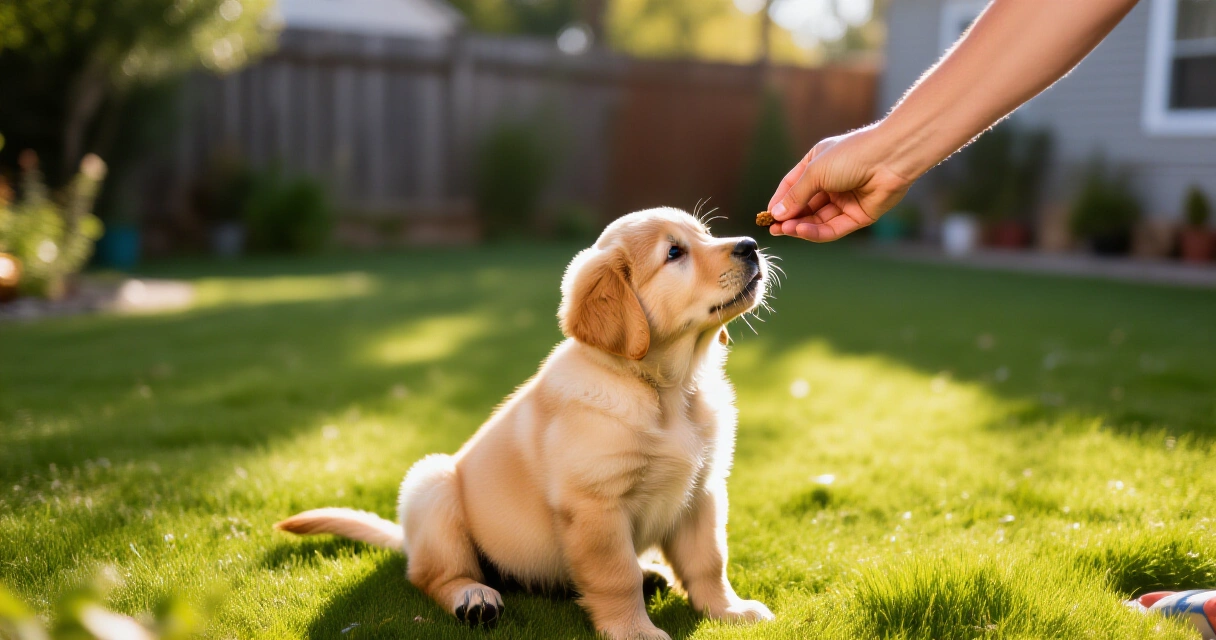
Puppy receiving a treat outdoors during house training session

Supervision Strategies When You Cannot Watch Constantly

Active supervision means keeping the puppy in the same room and within eyeline at all times when not crated. The Ohio State University Indoor Pet Initiative recommends tethering the puppy to your belt with a leash as one practical method — it forces proximity without requiring a separate space. When supervision must be interrupted, the puppy goes into the crate or a puppy-proofed pen.

For owners who want to learn about the right dog breeds before even beginning the house training process, understanding breed tendencies can be useful context. Some breeds are known for being easier or harder to house train based on their temperament. For a thorough overview of which dogs suit different lifestyles, see the guide to best dog breeds for first-time owners — it covers breed characteristics that directly affect training difficulty.

Potty Training Schedule by Puppy Age

The frequency of potty breaks should be adjusted as your puppy grows. Based on guidance from the UC Davis School of Veterinary Medicine and the RSPCA, here is a practical reference by age:

Puppy AgeOutdoor Breaks (Daytime)Approximate Hold Time
8–12 weeksEvery 30 minutes while awake~1 hour maximum
12–16 weeksEvery 45–60 minutes while awake~1.5–2 hours
16–24 weeksEvery 1.5–2 hours~2–3 hours
30+ weeks3–4 times daily (plus trigger events)~4 hours

Common House Training Mistakes That Slow Progress

Even well-intentioned owners make mistakes that extend the training timeline. A peer-reviewed study published in the Journal of the American Veterinary Medical Association found that preadoption counseling measurably improved house training outcomes among shelter dogs — meaning that informed owners achieve results faster. The most common errors include:

  • Giving the puppy unsupervised freedom too early in training
  • Inconsistent scheduling — skipping outings or varying timing unpredictably
  • Rewarding too slowly after the successful outdoor elimination
  • Punishing accidents after the fact rather than interrupting them in the moment
  • Using the wrong cleaner for indoor accidents, leaving residual odor that attracts repeat mistakes
  • Sending the puppy outside alone instead of accompanying them to the potty spot

VCA Hospitals recommends always accompanying the puppy outside to the elimination area rather than opening a door and waiting. Supervision during outdoor time ensures the reward is delivered at exactly the right moment and confirms that elimination actually occurred before returning inside.

Owner education before or immediately after adoption is one of the strongest predictors of house training success — informed routines beat raw patience every time.

Pee Pads vs. Outdoor-Only Training

Some owners use indoor pee pads — brands such as Frisco, Amazon Basics, or Glad for Pets are widely available options — as an intermediate step, particularly in high-rise apartments or with very young puppies who cannot yet access outdoors quickly. The tradeoff is that pee pads teach the puppy that indoor elimination is acceptable, which can complicate the transition to outdoor-only training. Most veterinary guidance, including that from Best Friends Animal Society, recommends going directly to outdoor training whenever possible to avoid teaching a habit that must later be unlearned.

If pee pads are necessary for your living situation, place them in one consistent location and gradually move them closer to the door over days and weeks, eventually transitioning the puppy to eliminating just outside the door and then fully outdoors.

What the Evidence SaysAccording to the IAABC Foundation Journal, the three legs of fast house training are a consistent schedule, immediate reward for correct elimination, and a structured naptime routine — particularly for puppies in busy households where accidents are more likely during unmonitored moments.

Comparison: Training Methods at a Glance

MethodBest ForSpeedKey Requirement
Crate + scheduleMost puppies, most homesFastestConsistent schedule, proper crate sizing
Puppy pen + scheduleOwners away for longer periodsModeratePen with pee pad section for overflow
Pee pad onlyApartments, very young puppiesSlowest overallPlan to transition to outdoor later
Free roam + supervisionOlder, partially trained dogsModerateEyes on puppy at all times

Frequently Asked Questions

How long does it realistically take to house train a puppy?

According to the IVHS & SPCA, most puppies take 4–6 months to become fully house trained, and some can take up to a year. With a strict schedule, crate training, and consistent rewards, noticeable progress typically appears within the first two to three weeks — but full reliability takes time as the puppy’s bladder matures.

Can you truly house train a puppy in 7 days?

Major veterinary and animal welfare authorities, including the IVHS & SPCA, VCA Hospitals, and the RSPCA, do not support claims that a puppy can be fully house trained in 7 days. A puppy may learn the concept quickly, but physical bladder control continues to develop for months. You can see significant improvement in one to two weeks with excellent consistency, but full training takes longer.

How often should I take my puppy outside to potty?

For puppies under 12 weeks, every 30 minutes while awake is the recommended starting point according to the IVHS & SPCA. As the puppy grows, the interval can extend. The RSPCA also advises taking puppies out after every meal, nap, play session, and period of excitement. Always go outside after trigger events regardless of the clock.

Should I punish my puppy for having an accident inside?

No. The RSPCA explicitly advises against punishing a puppy for an accident, whether during the act or after it. Puppies cannot connect after-the-fact punishment with the earlier behavior, so it produces fear without teaching the correct action. If you catch the puppy mid-accident, calmly interrupt and take them outside immediately, then reward if they finish outdoors.

Do some dog breeds take longer to house train?

A study published in Applied Animal Behaviour Science examined whether dog size is associated with differences in house training completeness, suggesting that physical and behavioral differences between dogs can affect outcomes. Breed temperament, owner consistency, and the age training begins are all factors that influence speed.

What is the best cleaner for puppy accidents inside?

The UC Davis School of Veterinary Medicine recommends enzymatic cleaners specifically formulated for pet waste. Standard household cleaners do not fully break down the odor compounds in urine and feces, meaning residual scent can draw the puppy back to the same spot. Look for products explicitly labeled as enzymatic pet cleaners — Nature’s Miracle and Rocco & Roxie are two well-known examples widely available in the US.

Key Takeaways

House training a puppy fast comes down to three things: a consistent potty schedule tied to trigger events, active supervision or confinement when you cannot watch, and immediate positive reinforcement every time the puppy eliminates outdoors. Avoiding punishment for accidents, cleaning with enzymatic cleaners, and starting training between 12 and 16 weeks all contribute to a faster, more successful process. Most puppies show meaningful progress within the first few weeks when these principles are applied consistently — and full reliability follows as bladder control matures over the following months.

Sources

Best Dog Breeds for First-Time Owners: Your Complete 2026 Guide

Choosing the right dog is one of the most consequential decisions a new pet owner makes — yet millions of Americans adopt a breed that turns out to be a poor lifestyle match. According to the American Kennel Club, the best dog breeds for first-time owners share three defining traits: high trainability, a predictable and affectionate temperament, and moderate maintenance needs. Get those three things right and your first year with a dog becomes a joy rather than an ordeal.

In BriefThe best dog breeds for first-time owners are Labrador Retrievers, Golden Retrievers, Cavalier King Charles Spaniels, Poodles, and Bichon Frises — all rated highly for trainability and gentle temperament by the American Kennel Club. The single most important rule: match the breed’s energy level to your actual daily lifestyle, not the lifestyle you hope to have. A realistic lifestyle match is the strongest predictor of long-term owner satisfaction.

What Makes a Dog Breed Right for Beginners?

Not every lovable dog is an easy dog. Breeds suited to first-time owners consistently score well on four measurable dimensions: trainability (how readily they respond to basic cues), temperament predictability (low aggression risk, consistent behavior across environments), exercise demand (manageable with a normal working schedule), and grooming burden (no extreme coat care). The American Kennel Club uses these criteria in its breed selection guides, and veterinary behaviorists echo the same framework when counseling first-time adopters.

Breeds with strong herding or guarding instincts — such as Belgian Malinois or Rottweilers — are not on this list, not because they are inferior dogs, but because those instincts require experienced handling to channel safely. Similarly, high-prey-drive sighthounds and independent Nordic breeds demand a level of consistent, nuanced training that can overwhelm a new owner during the critical first months.

No. 1 most-recommended beginner breedLabrador Retriever (AKC, 2026)
Years Labrador Retriever held No. 1 U.S. popularity ranking31 consecutive years (AKC breed popularity data)
Key trainability trait shared by top beginner breedsFood motivation + low guarding drive (AKC breed standards)
Typical lifespan range across top beginner breeds10–16 years (AKC breed health data)

A Brief History of Breed Selection for New Owners

Deliberate matching of dog breeds to owner experience is a relatively modern concept. Until the mid-20th century, most dogs in the United States were working animals selected for functional traits — hunting, herding, or guarding — rather than household compatibility. The American Kennel Club, founded in 1884, began publishing structured breed temperament standards that gradually shifted how Americans thought about dogs as companions. By the 1990s, breed-suitability guides aimed at first-time owners had become a recognized genre, reflecting the rise of the suburban pet-keeping culture documented by the American Veterinary Medical Association. Today, the AVMA’s U.S. Pet Ownership and Demographics Sourcebook remains the most comprehensive national reference on how Americans live with dogs.

The Best Dog Breeds for First-Time Owners: Top Picks

The breeds below appear most consistently across veterinary guidance and the American Kennel Club‘s beginner recommendations. Each profile includes the traits that make the breed accessible and the one consideration new owners should plan for in advance.

Labrador Retriever

The Labrador Retriever is the default answer to “what breed should I get first?” for good reason. Labs are intensely food-motivated, which makes them among the easiest dogs to train with positive reinforcement. They are patient with children, sociable with strangers, and rarely show unpredictable aggression. The one thing to plan for: Labs are high-energy dogs that need at least 60 minutes of exercise daily. An under-exercised Lab will find its own entertainment — usually by chewing furniture. Owners who can commit to daily activity will find Labs deeply rewarding companions with a lifespan of roughly 10 to 12 years.

Golden Retriever

Golden Retrievers combine the Labrador’s trainability with a slightly softer, more emotionally sensitive temperament. They read human emotion well, tend to be gentle with young children, and adapt well to both active and quieter households — provided they still receive consistent daily exercise. The grooming commitment is real: Goldens have a dense double coat that sheds heavily twice a year and needs brushing several times per week. First-time owners who can budget for professional grooming every 8–10 weeks will find the Golden Retriever one of the most rewarding breeds to live with, with an average lifespan of 10 to 12 years.

Cavalier King Charles Spaniel

For owners without yards, apartment dwellers, or those who prefer a calmer daily pace, the Cavalier King Charles Spaniel is consistently cited by veterinary professionals as a top beginner choice. Cavaliers are adaptable — they’ll match their energy to their owner’s lifestyle — and they are naturally gentle, rarely showing aggression. Their exercise needs are modest: 30 minutes of daily walking is typically sufficient. The health consideration to discuss with a breeder or veterinarian: Cavaliers have a breed predisposition to mitral valve disease, a cardiac condition that warrants regular veterinary screening from middle age onward. With responsible breeding and attentive care, Cavaliers typically live 12 to 15 years.

Golden retriever puppy sitting on a green lawn, a popular choice among best dog breeds for first-time owners

Poodle (Miniature or Standard)

Poodles are among the most intelligent dog breeds recognized by the American Kennel Club, and that intelligence translates directly into ease of training. They pick up commands quickly, respond well to consistent positive reinforcement, and are notably low-shedding — a significant practical advantage for first-time owners in terms of household cleanliness and allergy management. Standard Poodles are active dogs; Miniature Poodles adapt well to smaller living spaces. Both need regular professional grooming every 6–8 weeks to prevent their curly coat from matting. Poodles are long-lived: 12–15 years is common.

Bichon Frise

The Bichon Frise is a cheerful, adaptable small breed with minimal shedding and a calm disposition that suits first-time owners in apartments or smaller homes. Bichons are affectionate without being clingy, friendly toward strangers and children, and only require moderate daily exercise. Their powder-puff coat needs professional grooming every 4–6 weeks to stay manageable. At 12–15 years, Bichons are hardy, long-lived companions with relatively few breed-specific health concerns compared to other small breeds of similar popularity.

Good to KnowBoston Terriers, Shih Tzus, and Pugs are also frequently recommended for first-time owners in urban settings. However, these brachycephalic (flat-faced) breeds carry specific health risks — breathing difficulty, heat sensitivity, and eye problems — that require attentive veterinary care. They are manageable for beginners who research these issues in advance and choose a reputable, health-tested breeder.

Breed Comparison: Key Traits at a Glance

The table below summarizes the five breeds most consistently recommended for first-time owners, based on traits documented by the American Kennel Club and recurring veterinary guidance. All figures reflect typical breed ranges, not individual guarantees.

BreedSizeDaily ExerciseShedding LevelAvg. LifespanBest For
Labrador RetrieverLarge (55–80 lb)60+ minHigh10–12 yrsActive families, outdoor lifestyles
Golden RetrieverLarge (55–75 lb)60+ minHigh10–12 yrsFamilies with children, suburban homes
Cavalier King Charles SpanielSmall (12–18 lb)30 minModerate12–15 yrsApartments, seniors, calmer lifestyles
Poodle (Standard)Medium–Large (40–70 lb)45–60 minVery Low12–15 yrsAllergy-sensitive households, active owners
Bichon FriseSmall (12–18 lb)20–30 minVery Low12–15 yrsApartments, first-time owners with limited space

Matching Your Lifestyle to the Right Breed

The most consequential decision in choosing among the best dog breeds for first-time owners is not which breed tops a popularity list — it is which breed genuinely fits your daily life. Veterinary behaviorists consistently identify lifestyle mismatch as the leading cause of early rehoming. Before you decide on a breed, answer these questions honestly:

  • How much time do you have each day for exercise? If the honest answer is 20–30 minutes, choose a Bichon Frise or Cavalier, not a Labrador.
  • Do you live in an apartment or a house with a yard? Larger, energetic breeds need outdoor space; small breeds adapt to apartments more readily.
  • Do you or household members have allergies? Low-shedding breeds such as Poodles and Bichon Frises are often better tolerated, though no dog is truly hypoallergenic.
  • Are there young children in the home? Labrador Retrievers and Golden Retrievers have well-documented patience with children.
  • What is your grooming budget? Low-shedding dogs typically cost more in professional grooming fees than higher-shedding breeds that can be managed at home.
The best breed for a first-time owner is not the most popular breed — it is the breed whose daily needs align with the life you actually live.

Training Tips That Apply to All Beginner-Friendly Breeds

Even the most trainable breeds require consistency, patience, and a structured approach in their first months. The following principles apply regardless of which breed you choose from the best dog breeds for first-time owners:

  • Start obedience training in the first week. Puppies begin forming habits from day one. The earlier you establish routines and basic cues (“sit,” “stay,” “come”), the easier the next decade becomes.
  • Use positive reinforcement exclusively. Reward-based training — using treats, praise, and play as incentives — is consistently shown by veterinary behavioral research to produce faster, more durable learning than punishment-based methods.
  • Enroll in a puppy class. Group puppy classes combine socialization with basic training. The American Kennel Club’s Canine Good Citizen program provides a structured framework many first-time owners find invaluable.
  • Be consistent across all family members. A dog trained by one person but handled inconsistently by others will develop mixed signals and behavioral confusion.
Why This MattersThe American Veterinary Society of Animal Behavior (AVSAB) states that the primary and most important time for puppy socialization is the first three months of life. Puppy classes and structured socialization during this window significantly reduce the risk of fear-based and aggression-related behavioral problems in adulthood.

Health Considerations for First-Time Dog Owners

Each breed recommended in this guide carries its own health profile. Being informed before you commit is part of responsible first-time ownership.

BreedPrimary Health Watch PointsRecommended Screening
Labrador RetrieverHip and elbow dysplasia, obesity riskOFA hip/elbow evaluation; annual weight checks
Golden RetrieverHip dysplasia, certain cancers, heart conditionsOFA hip evaluation; annual cardiac exam
Cavalier King Charles SpanielMitral valve disease (MVD), syringomyeliaAnnual cardiac screening from age 1; MRI if symptomatic
PoodleHip dysplasia (Standard), progressive retinal atrophyOFA evaluation; annual eye exam (CAER certified)
Bichon FriseBladder stones, allergies, patellar luxationUrinalysis; skin and joint assessments

The Orthopedic Foundation for Animals (OFA) maintains an open health database for each registered breed. Before purchasing a puppy, ask for the OFA numbers of both parents — a reputable breeder will provide them without hesitation.

Asking a breeder for OFA health clearances is not optional — it is the baseline due diligence that separates a well-bred dog from a costly gamble.

Adoption vs. Breeder: What First-Time Owners Should Know

Many of the best dog breeds for first-time owners are available through breed-specific rescue organizations, not just breeders. Labrador Retriever and Golden Retriever rescues exist in virtually every U.S. state and often have adult dogs — already past the demanding puppy stage — available for adoption. Adult dogs from rescue frequently arrive with some training, a known temperament, and lower energy than a puppy. According to the Shelter Animals Count national database, millions of dogs enter U.S. shelters each year, including purebred and breed-mix dogs well suited to beginners. For first-time owners open to an adult dog, rescue adoption is a genuinely excellent path.

Limitations of This GuideThis article covers five of the most consistently recommended breeds for beginner owners based on AKC guidance and veterinary professional consensus. Individual dogs vary significantly within any breed. Mixed-breed dogs can be excellent choices for first-time owners as well — a shelter assessment by a trained behaviorist is often more informative than breed alone. This guide does not cover every beginner-suitable breed, nor every health risk within the five breeds profiled.

Frequently Asked Questions

What is the single easiest dog breed for a first-time owner?

The Labrador Retriever is most consistently cited as the easiest breed for beginners by veterinary professionals and the American Kennel Club, primarily because of its strong food motivation, stable temperament, and willingness to please. That said, “easiest” depends on lifestyle: for an apartment dweller, a Bichon Frise or Cavalier King Charles Spaniel may be a better practical fit despite the Lab’s widely praised trainability.

Are small dogs easier for first-time owners than large dogs?

Not necessarily. Small dogs often require just as much training and socialization as large dogs, and some small breeds have strong-willed temperaments that challenge first-time trainers. Toy terriers, Chihuahuas, and Dachshunds, for example, can be stubborn and difficult for inexperienced owners despite their size. The breeds recommended in this guide — including the small-to-medium Cavalier and Bichon — are specifically chosen for temperament suitability, not just size.

Is a Poodle a good choice if I have allergies?

Poodles are among the most popular choices for allergy-sensitive households because their curly, low-shedding coat releases fewer airborne allergens than double-coated breeds. However, no dog is truly hypoallergenic — all dogs produce dander and saliva proteins that trigger allergies. If allergies are a serious concern, spend time with a Poodle before committing, and consult an allergist. The Bichon Frise is another low-shedding option with a similar practical profile.

Should I get a puppy or an adult dog as a first-time owner?

Both are valid paths with different tradeoffs. Puppies require intensive training, socialization, and supervision in their first year — a significant time commitment. Adult dogs from rescue or responsible breeders often have established temperaments and some basic training, which can be easier for first-time owners to manage. An adult Labrador or Golden Retriever from a breed-specific rescue, for example, can be an excellent first dog for someone who wants a manageable companion without the demands of the puppy stage.

How much does it cost to own one of these breeds per year?

Annual costs vary widely by location, lifestyle, and individual health. Based on general veterinary and pet industry estimates, first-year costs for a large breed like a Labrador or Golden (including purchase or adoption, vaccinations, supplies, food, and training) typically range from several hundred to several thousand dollars, with recurring annual costs thereafter for food, preventive veterinary care, and grooming. The American Veterinary Medical Association tracks ownership cost trends in its pet demographics reports. Budget for unexpected veterinary expenses by considering pet health insurance from the start of ownership.

What breeds should first-time owners avoid?

Breeds that are often challenging for first-time owners include Belgian Malinois (intense working drive, high exercise needs), Chow Chows (strong guarding instincts, low stranger tolerance), Akitas (independent and strong-willed), Dalmatians (very high energy, sensitive temperament), and Weimaraners (prone to separation anxiety, demanding exercise needs). These are wonderful dogs in experienced hands, but they require handling skills and lifestyle commitments that take most owners years to develop.

Key Takeaways

  • The best dog breeds for first-time owners prioritize trainability, stable temperament, and manageable maintenance — not popularity alone.
  • Labrador Retrievers and Golden Retrievers are the most consistently recommended large-breed options; Cavalier King Charles Spaniels, Poodles, and Bichon Frises lead the small-to-medium category.
  • Lifestyle match — exercise capacity, living space, grooming budget — matters more than any single breed ranking.
  • Begin training and socialization in the first week; enroll in a puppy class and use only positive reinforcement methods.
  • Research breed-specific health conditions and ask breeders for OFA health clearances before purchasing a puppy.
  • Breed-specific rescue organizations are a legitimate and rewarding path to finding beginner-friendly adult dogs.

Sources